Care to Translate
Care to translateMedical
4.428.00 Reviews
- Version
- 7.1.8
- Installs
- 500.00K
- Age Rating
- Everyone
Screenshots
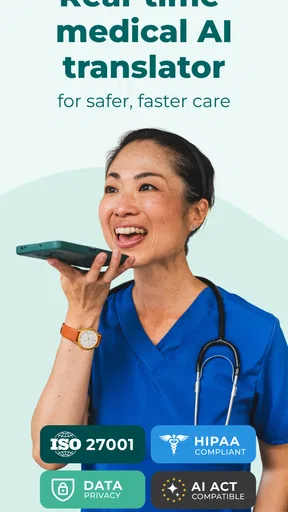
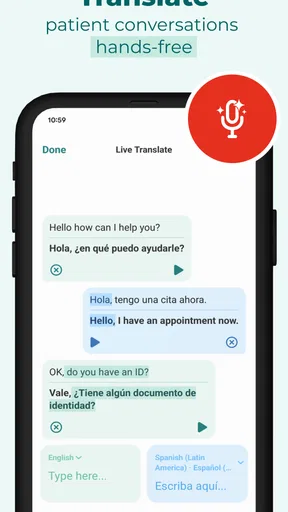
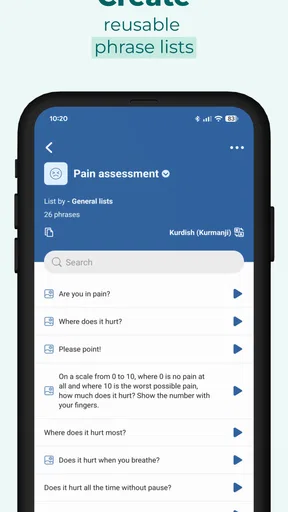
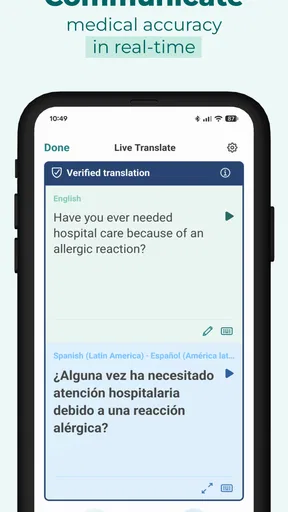
Our Review of Care to Translate
 Analysis by Appyee
When a health problem comes up in a language I barely understand, ordinary translation can feel like a weak safety net. I want to explain what hurts, follow a question, and make sure the other person understands me—not puzzle over how to phrase a medical term. That is the specific problem Care to Translate is meant to help with, and it is why I’d consider keeping it ready before a trip or a healthcare appointment where language may be a barrier.
What the cost does—and doesn’t—tell you
The app is free to download, with in-app purchases listed from $12.99 to $179.99 per item. That makes trying it out a different decision from paying for an ongoing service: you can start without an upfront app price, but some purchases may cost substantially more than others. I’d check the price and terms shown for the specific purchase in the app before committing, rather than assume every useful function is free or that one purchase covers every situation.
For me, the practical question is whether a healthcare-focused translation tool is worth having available when it matters. A free starting point lowers the barrier to testing the interface and deciding whether it fits your needs. The paid options are worth weighing against how often you expect to use the app and whether your workplace, travel plans, or care setting already provides language support.
What makes a medical translator useful
In this category, a general-purpose translator is the obvious alternative. It can be handy for everyday conversation, but healthcare exchanges have a different rhythm: the language may involve symptoms, treatment, or instructions, and there may be little time to write a perfect sentence. Care to Translate is a medical app from Care to translate, with its focus on communication in care settings. That specialization is the reason I’d try it alongside—not automatically instead of—general translation tools.
The app has an average rating of 4.4 from around 2,400 ratings, and it has been installed over 500,000 times. Those figures suggest that many people have found it worth trying, but they can’t tell me whether a particular language pair or real-world conversation will meet my needs. I’d test the languages and the way I plan to communicate before relying on any translation tool during a stressful appointment.
Care to Translate is rated for Everyone and is currently at version 7.1.8, with a minimum operating-system requirement of 7.0. It was released on March 15, 2019. Those details help with basic compatibility and context, but my decision would still come down to fit: a focused medical translator is most useful when the conversation is about care, not when I simply need to translate a menu or a casual message.
Trade-offs to think through before relying on it
Translation can make a conversation easier to begin, but it is not the same thing as a qualified interpreter. In a serious or complicated medical discussion, I would treat an app as a communication aid, not as proof that every detail has been understood correctly. I’d ask the clinician to repeat or rephrase important instructions, and use a professional interpreter when the situation calls for one. That caution matters especially for decisions where a misunderstanding could affect care.
There is also a difference between translating a prepared phrase and handling an unpredictable conversation. A phrase-based approach can be reassuring when someone needs to describe a common concern, but it may be less flexible if the discussion changes direction or requires detailed follow-up. Before an appointment, I’d think through the main points I need to convey and keep them simple. That preparation helps any translation tool do its job without asking it to replace a two-way clinical conversation.
Breaking Down Language Barriers
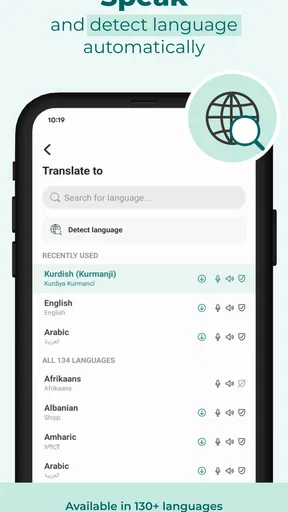
First things first, Care to Translate is designed to make communication in healthcare as smooth as possible. Imagine being in a foreign country and needing medical assistance. The app supports translations in over 30 languages, covering a wide range of medical terms and phrases. You can simply select your language, and voilà, you're ready to communicate with healthcare professionals without any hassle.
Interface and Usability
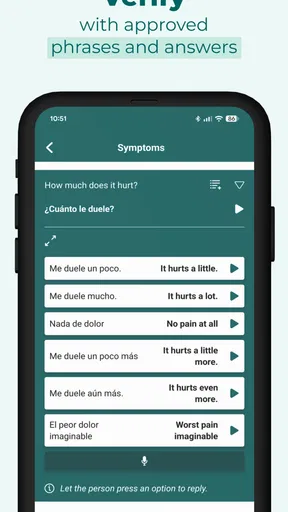
The app's interface is pretty user-friendly. Navigating through it feels intuitive, even if you're not particularly tech-savvy. The main screen offers quick access to various categories like symptoms, diagnostics, and treatments. One tap, and you're led to a list of common phrases that can be heard or shown to the medical staff. It's as if the app anticipates what you need in critical situations.
For a first visit, I’d spend a quiet minute exploring the relevant categories before I’m in a hurry. Knowing where a symptom-related phrase lives can be more useful than searching under pressure. A small trial run—choosing a phrase and checking how it is presented—also gives me confidence that I can put the screen in front of a clinician without fumbling with the controls. That preparation is simple, but it turns a phone app into a more practical part of an appointment plan.
Features That Stand Out
The voice function is an absolute lifesaver. You can play audio translations, which means you don't have to worry about mispronouncing medical jargon in a foreign language. Another cool feature is the "Favorites" section. You can bookmark frequently used phrases for quick access, making repeat visits to a doctor much less stressful.
Favorites are especially useful when the same basic information may come up more than once: rather than repeatedly browsing through categories, I can save the phrases I expect to need and keep the visit focused. I would still check each saved phrase before using it, because a familiar shortcut is only helpful if it matches the situation at hand. Playing audio can also help when speaking feels difficult, while showing a phrase gives the other person a chance to read it directly.
Plus, the app works offline. This is a huge plus, especially when you're traveling with spotty internet access. No need to panic about losing connection at a crucial moment.
Offline access changes how I’d prepare: I would open the app before leaving reliable internet, make sure I can reach the phrases I expect to use, and avoid waiting until I’m already at a clinic to discover a connection problem. That is a useful precaution for travel or a building with poor reception. It does not remove the need to think ahead, though; I’d still keep essential appointment details available in a form I can access if the phone is unavailable.
The User Experience
I found myself appreciating the app's simplicity. It doesn’t bombard you with unnecessary features. Everything is straightforward and serves its purpose: to assist with medical translations. The team behind Care to Translate clearly understands the importance of a quick and reliable tool in healthcare settings.
That simplicity is a real strength when a patient is anxious, tired, or trying to communicate while managing a physical problem. It is also a trade-off: anyone expecting a full substitute for an interpreter or a flexible, open-ended conversation tool should set expectations carefully. I would use the app to make basic exchanges clearer and to support a discussion, while leaving complex explanations and high-stakes decisions to a clinician and a qualified interpreter where appropriate.
Moreover, the app is continuously updated with new phrases and languages. This dynamic approach ensures that users have the most current and comprehensive support available. It's great to see that the developers listen to feedback and make improvements based on user needs.
For ongoing use, I’d make a habit of checking that the installed version is current before a planned trip or a series of appointments, rather than waiting until a need arises. The developer is Care to translate, and the app’s current version is 7.1.8. Updates can matter for a tool people rely on, but I would still treat my own preparation—finding the right phrases and confirming that they fit—as part of using it responsibly.
Who Can Benefit from Care to Translate?
While the app is primarily targeted at healthcare professionals and patients, it's also incredibly useful for travelers, expats, or anyone who might find themselves in a medical situation abroad. It's like having a trusty sidekick that ensures you're understood wherever you go.
A realistic use case is a traveler who develops a new symptom and needs to explain it at a local clinic. Before leaving the hotel, they can open the app, locate a suitable phrase, and save likely follow-ups as Favorites. At reception, they can show or play a translation rather than relying on gestures or a hurried attempt to type everything into a general translator. If the clinician asks a question the app does not make easy to express, the traveler should slow the exchange down and seek additional language help instead of guessing at the meaning.
For medical practitioners working in multicultural environments, this app can be a game-changer. It allows for clear and concise communication, reducing the risk of misunderstanding and ensuring better patient care.
In a busy care environment, the value may be less about replacing a complete interpreter session and more about helping with a brief, routine exchange while staff arrange appropriate language support. A clinician could use a translated phrase to make an immediate question easier to understand, then confirm the answer in a way that fits the patient’s situation. I would not use it to rush through consent, complex diagnoses, or nuanced treatment choices; those deserve a more dependable, two-way communication plan.
It is less compelling for someone who only wants to translate everyday travel chat, since a general translator is likely a more natural fit for that broad use. It may also be the wrong choice for a person who needs detailed, unscripted interpretation throughout a complicated appointment. The distinction is useful: this app is focused on healthcare communication, so its value is strongest when the need is specific, not simply because a phone can translate words.
How I’d decide whether it is worth keeping
If I were choosing between this and a general translator, I’d use the medical focus as the deciding factor. For a planned appointment, I’d explore the relevant categories, save a few likely phrases, and check that audio or on-screen text works in the way I expect. For a casual question outside healthcare, I’d reach for a general tool instead. Keeping both approaches in mind avoids expecting one app to be best at every kind of conversation.
One useful question is whether the other person can read the translated text or hear its audio in the moment. If not, I’d plan a backup way to communicate, such as writing down key points or arranging language assistance. Another is whether the conversation is routine or high stakes: the more complicated the exchange, the less comfortable I’d be relying on a phrase-based app alone. Those checks are quick, but they help keep the app in its proper role.
Final Thoughts
So, is Care to Translate worth downloading? Absolutely! It's a reliable, easy-to-use tool that enhances communication in critical situations. The app's focus on healthcare translations is its standout feature, and the breadth of languages covered makes it incredibly versatile.
In a world that's becoming more interconnected, having an app like this at your fingertips can make all the difference. Whether you're a healthcare worker, a frequent traveler, or someone living abroad, Care to Translate is a must-have. I’d say give it a try and experience the peace of mind it offers.
Download it today from your preferred app store, and let it be your trusted companion in bridging the language gap in healthcare!
My recommendation is more measured than a blanket “must-have”: I’d try the free download if I travel, live somewhere multilingual, or regularly help patients who speak another language. The paid items may make sense for a frequent user after checking exactly what each purchase includes, but I would not pay simply on the assumption that every medical conversation will be covered. The best value comes from using the app for the short, practical exchanges it is suited to and arranging professional help when the conversation needs more.
Overall, I see it as a useful preparation tool rather than a guarantee of perfect communication. Its healthcare focus, offline availability, audio, and saved phrases give me concrete reasons to keep it on hand; the need to verify important details and the possibility of paid options are reasons to approach it thoughtfully. If that balance matches your situation, it is worth trying. If you need an interpreter for complex care or only want broad everyday translation, another option may serve you better.
Verdict
Strengths of Care to Translate
- Offers real-time translation for medical terms.
- Supports over 50 languages accurately.
- User-friendly interface with intuitive design.
- Offline mode available for remote areas.
- Frequent updates with new medical terms.
Limitations of Care to Translate
- Limited to medical context only.
- Requires internet for full functionality.
- Subscription model may deter casual users.
- Some languages lack complete coverage.
- Occasional inaccuracies in rare dialects.
Similar Picks in This Category
View All
WebMD: Symptom Checker
WebMD, LLC4.1

Microphone Amplifier
DOSA Apps4.2

Anatomy Learning - 3D Anatomy
3D Medical OU4.5

Period Tracker and Calendar
SimpleInnovation4.9

GoodRx: Prescription Coupons
GoodRx4.8

CVS Health
CVS Pharmacy4.5
Frequently Asked Questions
What is Care to Translate and how does it work?
Care to Translate is a medical translation app designed to facilitate communication between healthcare professionals and patients who speak different languages. The app offers a wide range of pre-translated medical phrases and terms, ensuring accurate and efficient communication. Users select the desired phrase, which the app then translates and vocalizes in the patient's language.
Is Care to Translate available offline?
Yes, Care to Translate offers offline functionality, allowing users to access essential phrases and translations without an internet connection. This feature is particularly useful in medical settings where connectivity might be limited. However, ensure you download necessary language packs in advance to make the most of this feature.
How many languages does Care to Translate support?
Care to Translate supports over 40 languages, covering a broad spectrum of widely spoken and less common languages. This extensive range ensures that healthcare workers can communicate with a diverse patient demographic, providing better care and reducing language barriers in medical settings.
Is Care to Translate free to use?
Care to Translate offers a free version with access to basic features and a limited number of languages. For more comprehensive access, including the full range of languages and advanced features, users can upgrade to the premium version, which requires a subscription. This ensures flexibility based on user needs and budget.
How secure is the data on Care to Translate?
Care to Translate prioritizes user privacy and security, adhering to strict data protection regulations. The app does not store any personal or sensitive information, minimizing the risk of data breaches. Users can confidently use the app, knowing that patient confidentiality is maintained throughout their interactions.
